
The Difference a Community Can Make Starts at the Table
Holbrook’s 2025–2026 Community and Family Engagement data offers a meaningful example of what can happen when a district creates more opportunities for its community to show up, listen, participate, and invest in its schools.
A school district can have committed educators, caring families, ambitious students, and community members who genuinely want to help—and still struggle to turn that goodwill into a coordinated effort.
That is especially true in rural communities like Holbrook Unified School District #3, where geography, distance, limited connectivity, and unequal access to enrichment opportunities can make meaningful engagement more difficult. Some families live 50 to 60 miles from school. Internet access is not consistent everywhere. And students may not have the same proximity to museums, arts organizations, businesses, internships, and other learning opportunities available in larger cities.
These are not challenges that schools can—or should—be expected to solve alone.
They are community challenges. And they require a community response.
That is where School Connect comes in.
School Connect helps districts create a clear pathway for bringing people together around what students, families, and educators need most. The work begins with training and coaching, continues through CAFE conversations, and grows into ongoing community partnerships that can strengthen a school long after a single event has ended.
Holbrook’s 2025–2026 Community and Family Engagement data offers a meaningful example of what can happen when a district creates more opportunities for its community to show up, listen, participate, and invest in its schools.
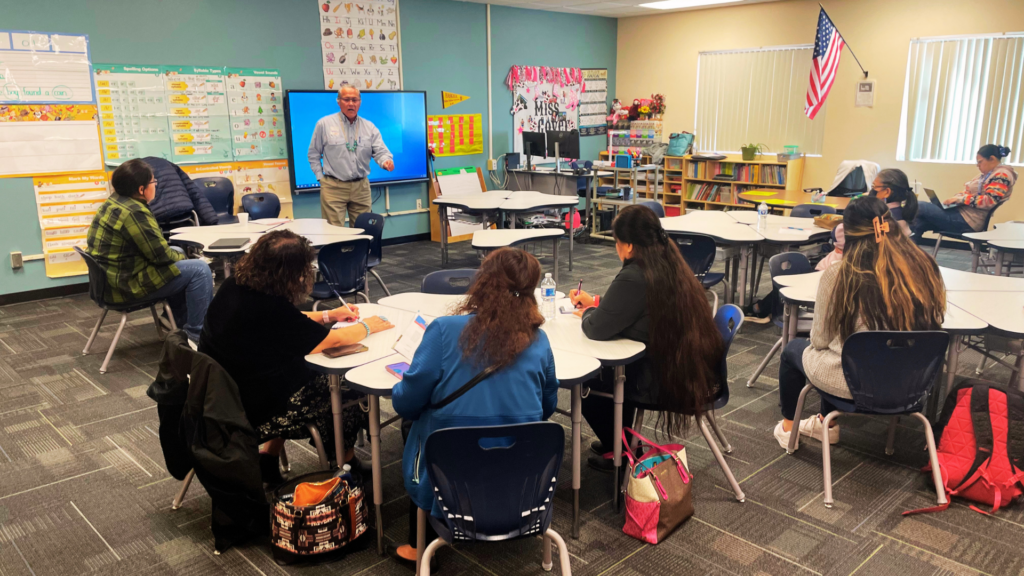
The challenge is bigger than one school
In a world where career pathways are changing rapidly, the need for schools to pull support beyond the traditional classroom is essential for success.
In every community, schools carry a great deal. Educators are asked to support academic learning while also navigating attendance concerns, family needs, student well-being, staffing pressures, changing expectations, and the many barriers that can affect a child’s ability to thrive.
In rural districts, those realities can be compounded by distance and access.
For Holbrook, family engagement is not as simple as sending an invitation and expecting everyone to attend. A parent may need to travel a significant distance. Virtual participation may not be a dependable alternative when Wi-Fi is unavailable or inconsistent. Community partners may be farther away. Students may need their school to bring cultural, arts, career, and enrichment experiences directly to campus—or provide transportation to reach them.
At the same time, Holbrook serves a large Native student population, making representation, cultural responsiveness, and meaningful student and family voice essential to the district’s community-building work.
The question, then, is not whether educators care enough or are working hard enough. They are.
The more useful question is: How can a community help carry the work?
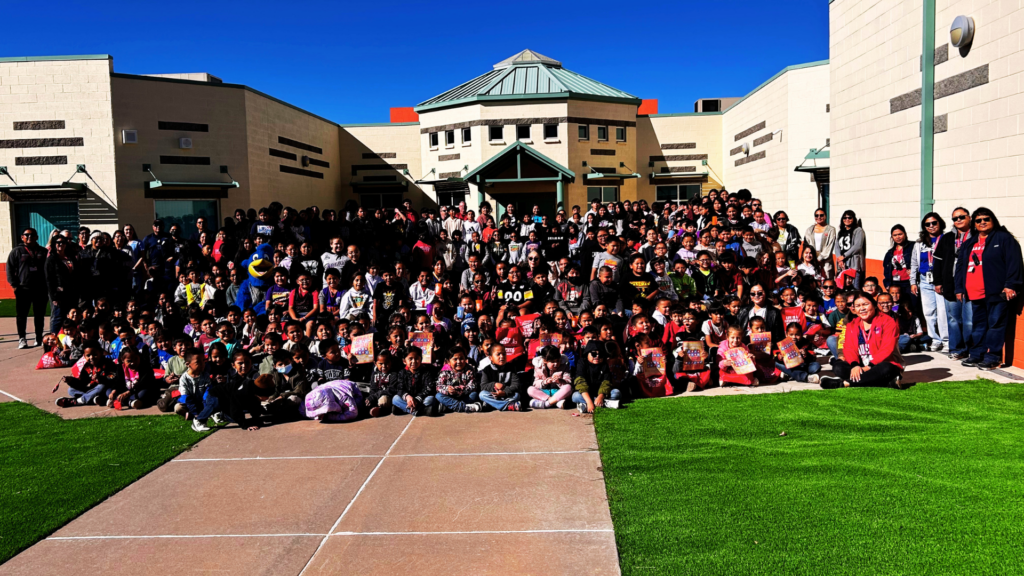
School Connect begins with clarity
This first step matters because communities want to help—but they often do not know what help is needed most.
School Connect’s process starts before a public event, volunteer day, or partnership announcement. It starts by helping a school team pause, look at its data, identify priorities, and name what it wants to be true for students, families, and staff.
Through training and coaching, School Connect helps school teams:
- Clarify their vision and priorities for students, families, and staff.
- Look beyond academic data alone to consider factors such as family engagement, student behavior, teacher retention, and school culture.
- Identify a focused set of goals that matter most in the local community.
- Connect those goals to specific, achievable projects rather than creating an overwhelming list of good intentions.
- Build a roadmap that gives staff and partners shared ownership of the work.
This first step matters because communities want to help—but they often do not know what help is needed most.
Without clarity, a school can receive generous offers that are disconnected from its most urgent goals. With clarity, school leaders can invite partners into a shared plan: Here is what our students need. Here is where we are headed. Here are meaningful ways you can contribute.
That shift can make the difference between a one-time gesture and a sustained partnership.
CAFEs bring the village to the table
CAFEs create a space where people can listen to one another, understand a school’s goals, identify barriers, and discover what each person or organization can uniquely contribute.
Once school leaders have a clear sense of their priorities, School Connect facilitates CAFEs: Community and Family Engagement gatherings designed to bring the right people into the same conversation.
A CAFE may include school leaders, educators, parents, students, faith leaders, nonprofit representatives, business leaders, government partners, neighborhood advocates, and other community members. The purpose is not simply to hold another meeting. It is to create a space where people can listen to one another, understand a school’s goals, identify barriers, and discover what each person or organization can uniquely contribute.
At a CAFE, schools are not asking the community to “fix” education. They are inviting the community to become part of the solution.
That is particularly important when challenges are complex. Family engagement, student attendance, staff retention, transportation, access to services, and student opportunity do not exist in isolation. They are shaped by a wider ecosystem of work schedules, housing, health, technology access, transportation, local resources, and community relationships.
School Connect’s CAFE model creates room for that fuller picture. It helps move the conversation from “What should the school do?” to “What can we do together?”
Holbrook’s data shows what participation looks like
The strongest evidence of community connection is not found in a single headline-making event, but in people showing up over time.
The strongest evidence of community connection is not always found in a single headline-making event. Often, it shows up in the repeated moments when families and community members choose to be present.
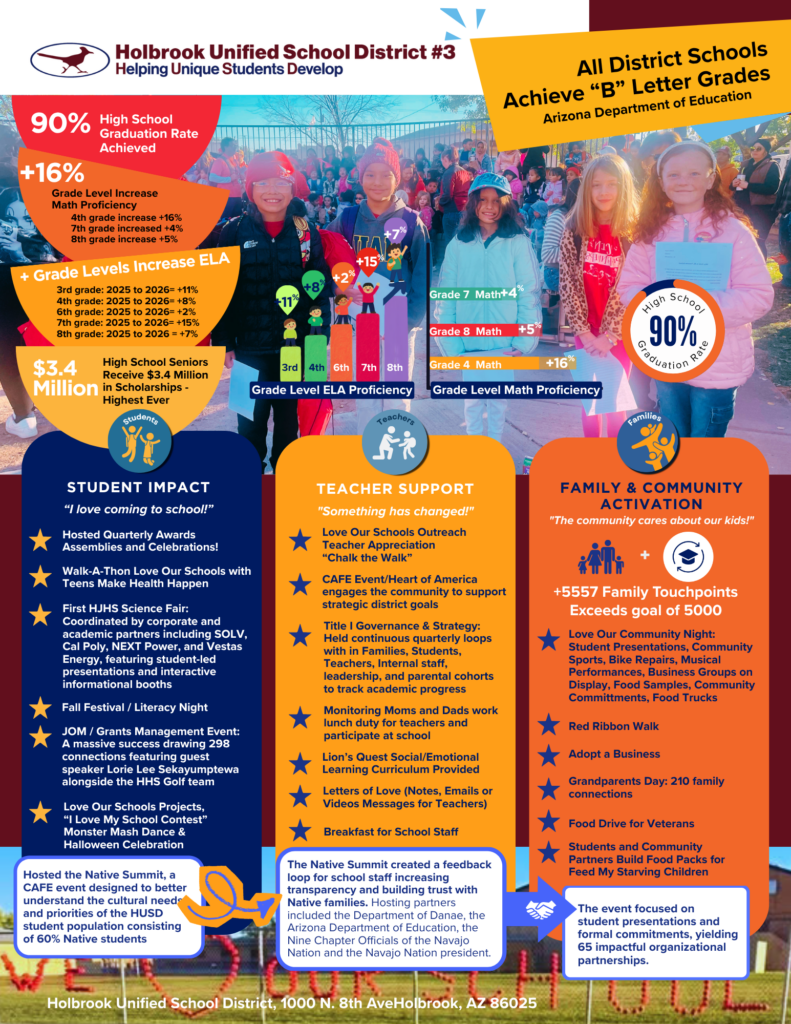
During the 2025–2026 school year, Holbrook Unified School District #3 recorded 5,557 on-campus contacts across its schools. These contacts included parents, family members, and community stakeholders attending school-sanctioned events.
That number matters because it reflects more than foot traffic. It represents thousands of opportunities for relationships to form and deepen between schools, families, students, and community partners.
| School site | Total on-campus contacts | Share of district total |
| Park/Hulet Elementary | 2,706 | 48.7% |
| Indian Wells Elementary | 1,582 | 28.5% |
| Holbrook Junior High School | 827 | 14.9% |
| Holbrook High School | 442 | 7.9% |
| District total | 5,557 | 100% |
At Park/Hulet Elementary, family participation began early in the year. Meet the Teacher events welcomed 102 of 153 Park families, 184 of 298 Hulet families in grades 2–5, and 18 of 26 Hulet preschool families. That represents turnout rates of 67%, 62%, and 69%, respectively.

The district then continued to create touchpoints throughout the year:
- Park/Hulet logged 457 contacts during fall parent-teacher conferences and 420 during spring conferences.
- The Park/Hulet Christmas Program drew 432 attendees.
- Grandparents Day welcomed 85 contacts at Park and 109 at Hulet.
- Thanksgiving Lunch drew 108 contacts at Park and 251 at Hulet.
- Field Day brought 107 contacts to Park and 149 to Hulet.
These individual events may look different on paper, but collectively they tell a larger story: families had multiple ways to enter the life of the school.
That is what long-term engagement requires. Not one invitation, but a pattern of invitations. Not one form of participation, but opportunities that meet families where they are—through celebrations, conferences, cultural events, student performances, academic milestones, and community gatherings.

Engagement opens doors for opportunity
In a community where access can be a barrier, outside partners can help bring expertise, career exposure, mentoring, health initiatives, arts, cultural opportunities, and practical resources closer to students and families.
Holbrook’s engagement activity also demonstrates the value of creating varied pathways for participation.
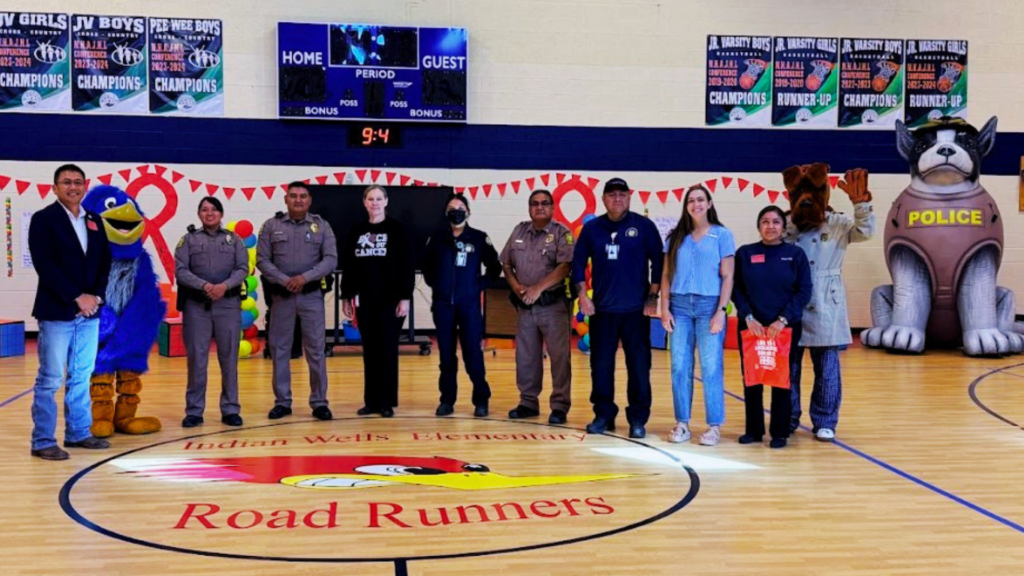
At Indian Wells Elementary, a JOM/Grants Management event brought together 298 contacts, including 287 families. The gathering featured guest speaker Lorie Lee Sekayumptewa, along with the Holbrook High School golf team and district JOM representatives.
The event was significant not simply because of attendance, but because it created a setting where family engagement, cultural connection, student involvement, and community partnership could coexist.
Indian Wells also welcomed 215 contacts at its Fall Festival/Literacy Night, 210 contacts on Grandparents Day, and more than 500 parent contacts across fall and spring conferences.
At Holbrook Junior High School, community partnerships helped create experiences that connected students, families, health, and learning. The school’s Walk-A-Thon, conducted as part of Love Our Schools outreach and in partnership with Teens Make Health Happen, brought together 200 in-person participants. The Heart of America event drew 280 contacts. HJHS also hosted its first science fair with participation from SOLV, Cal Poly, NEXT Power, and Vestas Energy.
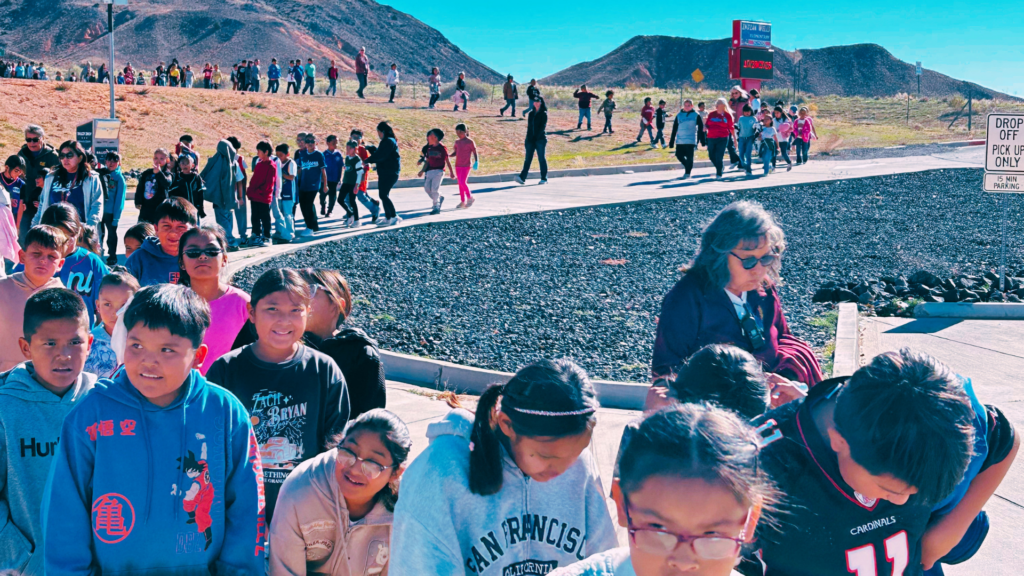
Those partnerships matter because they expand what a school can offer students. In a community where access can be a barrier, outside partners can help bring expertise, career exposure, mentoring, health initiatives, arts, cultural opportunities, and practical resources closer to students and families.
This is the power of a connected community: it helps close the distance between what students need and what is available to them.

Academic progress is part of the story
Community engagement is not a substitute for strong teaching, school leadership, or student effort. It is part of the environment that supports all three.
Community engagement is not a substitute for strong teaching, school leadership, or student effort. It is part of the environment that supports all three.
When families feel welcomed and informed, they are better positioned to partner with schools. When students see their achievements celebrated by parents, grandparents, teachers, and neighbors, they receive a powerful message that their education matters. When local organizations and leaders invest their time and resources in schools, they help widen the circle of support around every child.
Holbrook’s 2025–2026 results offer encouraging signs of that broader momentum:
- All HUSD #3 schools earned a “B” rating from the Arizona Department of Education, described in the district’s report as the highest achievement level in district history
- The graduating senior class earned a record $3.4 million in scholarships
- The district reported a 90% graduation rate for 2025–2026 seniors
- Fourth-grade math performance increased 16% year over year
- Third-grade ELA increased 11%, seventh-grade ELA increased 15%, and eighth-grade ELA increased 7% year over year
- Holbrook High School reported its highest ACT results in three years across composite score, English, math, reading, science, STEM, writing, and ELA
No single program or event can claim credit for these outcomes. Real academic growth reflects the work of students, educators, families, school leaders, and the community over time.
But the data reinforces an important truth: schools are stronger when they do not work in isolation.
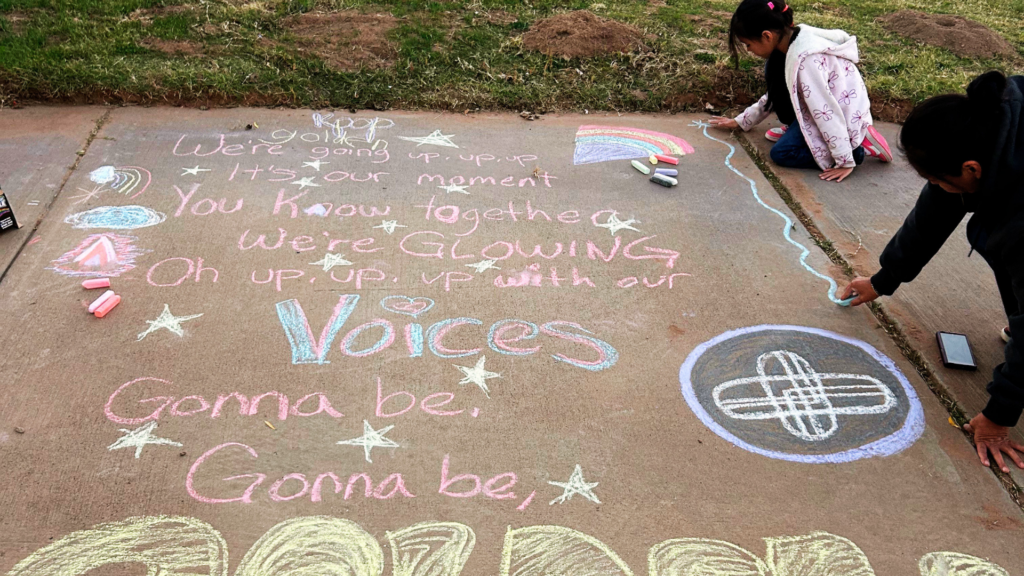
Partnership also means caring for educators
The goal is not to add another responsibility to educators’ already-full plates. The goal is to make sure they are not carrying the work alone.
A community-centered approach is not only about students and families. It is also about recognizing the people who serve them every day.
Educators are deeply committed to their students, but commitment does not eliminate the realities of exhaustion, limited capacity, and the expanding needs schools are asked to meet. In communities facing geographic, economic, and access-related barriers, schools often become a central hub for far more than academics.
That is why community partnership is a form of care.
When local organizations, businesses, faith communities, parents, and volunteers step into meaningful roles, they can help create capacity around the school. They can support family events, offer mentoring and career connections, provide expertise, help strengthen school culture, participate in student celebrations, and bring resources closer to students.
The goal is not to add another responsibility to educators’ already-full plates. The goal is to make sure they are not carrying the work alone.
School Connect’s training and CAFE process helps communities understand that shared responsibility. It provides a framework for listening first, identifying priorities together, and aligning partners around the work that will make the greatest difference.
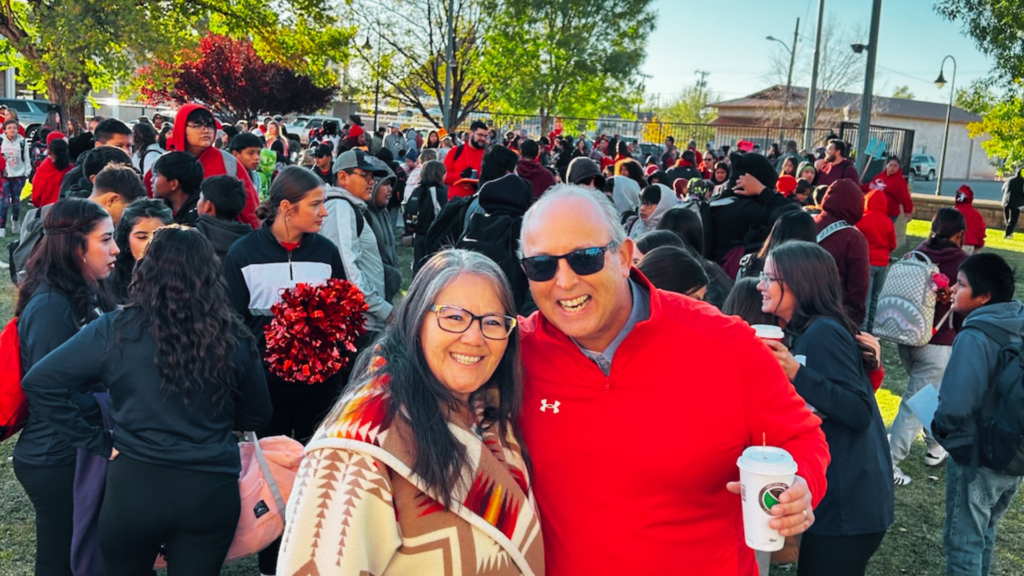
Building on the momentum
Holbrook’s data also points to the next opportunity.
The district’s elementary schools recorded particularly strong engagement, while junior high and high school participation was lower. This is not a failure of the secondary schools, their families, or their educators. Older students and their families often face different schedules, transportation demands, work responsibilities, and engagement needs.
It is an invitation to keep building.
Holbrook has identified potential ways to deepen secondary-school engagement, including student showcases, family dinners, athletic and community tailgates, and other non-academic events that give families meaningful reasons to gather on campus. The district also plans to make parent-satisfaction surveys easier to access by connecting them to high-traffic events through digital QR codes.

For School Connect, that is the ongoing work: helping a district use data not as a scorecard, but as a conversation starter.
Where are families already showing up?
Where are barriers making participation harder?
Whose voices need to be heard more fully?
What resources already exist in the community?
And how can schools and partners work together so that students have access to more opportunity, support, and belonging?
The lasting difference
Discovering that student success is shared work accomplished when a school’s goals become a community’s goals.
The Holbrook story is not about a district waiting for someone else to solve its challenges. It is about a community recognizing that student success is shared work.
School Connect helps make that work more intentional.
Through training, school teams gain clarity about where they are headed. Through CAFEs, community members gain a seat at the table and a clearer understanding of how they can help. Through ongoing partnerships, a school’s goals become a community’s goals.
The result is not merely a well-attended event or a completed project. It is a stronger ecosystem around students, families, and educators—one built through trust, shared ownership, and the belief that every child deserves a village invested in their future.
To learn about how the School Connect model can impact your school and community, reach out to our team at info@schoolconnectaz.org.